

soldier’s manual of common tasks
Need to know basic soldier skills? Our manual breaks down common tasks simply & effectively. Perfect for training or a quick refresher! Get the info you need now.
This comprehensive manual standardizes training objectives‚ equipping soldiers with essential skills for combat‚ survival‚ and achieving victory.

It serves as a vital resource for commanders‚ trainers‚ and soldiers alike‚ ensuring a consistent and effective approach to military preparedness.
Purpose and Scope of the Manual
The primary purpose of this Soldiers Manual of Common Tasks is to establish a standardized framework for training soldiers across various skill levels. It details the essential tasks soldiers must master to effectively operate in diverse combat scenarios‚ ensuring unit cohesion and mission success.
The scope encompasses a broad range of skills‚ beginning with foundational abilities at Skill Level 1 – movement‚ communication‚ and basic weapons handling – and progressing to more advanced techniques in land navigation‚ patrolling‚ and offensive/defensive operations (Skill Levels 2‚ 3‚ and 4).
This manual isn’t merely a list of procedures; it’s a guide for commanders and trainers to build competent‚ adaptable soldiers. It aims to bridge the gap between theoretical knowledge and practical application‚ ultimately enhancing the fighting force’s overall capability to fight‚ survive‚ and win.
Target Audience: Commanders‚ Trainers‚ and Soldiers
This Soldiers Manual of Common Tasks is specifically designed for three key groups within the military structure: commanders‚ trainers‚ and the soldiers themselves. Commanders will utilize the manual to assess unit readiness‚ identify training gaps‚ and develop effective training programs aligned with established standards.
Trainers will find it invaluable for delivering consistent‚ standardized instruction‚ ensuring all soldiers receive the same core competencies. The manual serves as a practical guide for conducting realistic training exercises and evaluating soldier performance.
Most importantly‚ soldiers will use this manual as a personal reference guide‚ reinforcing learned skills and providing a readily accessible resource for task reminders and best practices. It empowers soldiers to take ownership of their training and professional development‚ contributing to a more capable and confident fighting force.

Basic Soldier Skills ⸺ Skill Level 1
This foundational level focuses on core competencies‚ including movement‚ communication‚ and essential soldier tasks‚ preparing individuals for more advanced training.
Movement Techniques
Movement techniques are fundamental to soldier survivability and mission success. Skill Level 1 training emphasizes both individual and team movement‚ focusing on minimizing exposure to enemy fire and maintaining situational awareness. Individual movement techniques cover principles like bounding overwatch‚ low crawling‚ and utilizing terrain for concealment and cover. Soldiers learn to move deliberately and quietly‚ observing their surroundings and reacting to potential threats.
Team movement builds upon individual skills‚ incorporating formations like the wedge‚ echelon‚ and column‚ each suited for different terrain and tactical situations. Emphasis is placed on maintaining communication‚ coordinating movements‚ and providing mutual support. Proper spacing‚ timing‚ and reaction to contact drills are critical components of this training. Mastering these techniques allows soldiers to effectively navigate the battlefield‚ close with the enemy‚ and achieve tactical objectives while minimizing casualties.
Individual Movement Techniques
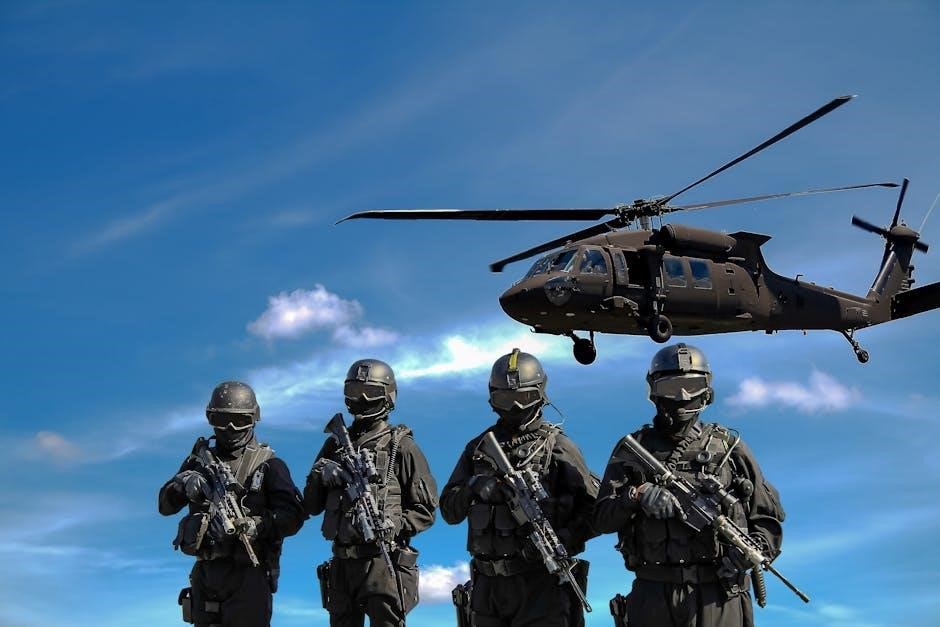
Proficiency in individual movement techniques is paramount for every soldier’s survival and operational effectiveness. These techniques prioritize minimizing visibility and maximizing protection while navigating diverse terrains. Core skills include the low crawl – a stealthy method for moving under direct fire – and the high crawl‚ offering increased speed with reduced concealment.
Bounding overwatch‚ a crucial technique‚ involves successive movements covered by a teammate’s suppressing fire. Soldiers also learn to utilize terrain features – such as hills‚ trees‚ and depressions – for cover and concealment. Emphasis is placed on maintaining situational awareness‚ constantly scanning for threats‚ and adapting movement based on the environment. Practicing these techniques builds muscle memory and instills a habit of deliberate‚ cautious movement‚ significantly enhancing a soldier’s ability to operate safely and effectively in combat zones.
Team Movement Techniques
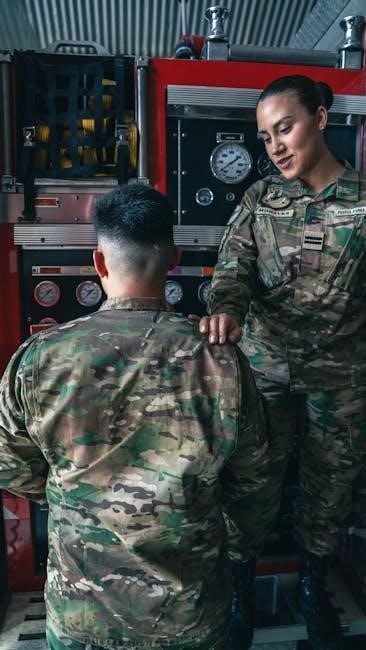
Effective team movement is critical for maintaining security‚ achieving tactical objectives‚ and minimizing casualties. These techniques build upon individual skills‚ emphasizing coordination and communication. The wedge formation provides all-around security‚ ideal for open terrain‚ while the file formation is suited for narrow spaces or dense vegetation.
The Vee formation offers a balance between security and speed‚ and the line formation maximizes firepower. Key elements include staggered movement‚ maintaining proper spacing‚ and utilizing bounding overwatch to cover advances. Constant communication – using hand and arm signals or radio – is essential for relaying information about enemy contact and adjusting formations. Successful team movement requires rigorous practice and a shared understanding of roles and responsibilities‚ fostering cohesion and enhancing the team’s overall combat effectiveness.
Communication Skills
Clear and concise communication is paramount for mission success and soldier safety. This encompasses both verbal and non-verbal methods‚ ensuring information is accurately conveyed under stressful conditions. Radio communication procedures demand brevity‚ clarity‚ and the use of standardized terminology to avoid misunderstandings. Proper microphone technique and adherence to radio protocols are crucial.
Beyond radio‚ hand and arm signals provide a silent means of communication‚ vital for maintaining stealth or when radio use is compromised. Soldiers must be proficient in recognizing and executing these signals. Effective communication also involves active listening‚ acknowledging received messages‚ and seeking clarification when needed. Regular practice and realistic training scenarios are essential for honing these skills‚ fostering trust and enabling seamless coordination within the team.
Radio Communication Procedures
Effective radio communication relies on strict adherence to established protocols. Soldiers must master the use of call signs‚ brevity codes‚ and the phonetic alphabet to ensure clarity and minimize errors. Transmissions should be concise‚ conveying essential information only – avoid unnecessary chatter. Proper microphone technique‚ including speaking clearly and at an appropriate volume‚ is vital for intelligibility.
Before transmitting‚ soldiers must verify the frequency and ensure the channel is clear. Radio checks confirm functionality and signal strength. Understanding radio discipline‚ such as avoiding prolonged transmissions and maintaining radio silence when required‚ is crucial for security. Regular practice with radio equipment and simulated scenarios builds proficiency and confidence. Accurate reporting and acknowledging received messages are also key components of successful radio communication.
Hand and Arm Signals
Hand and arm signals provide a silent‚ reliable method of communication‚ particularly crucial when radio silence is enforced or environmental conditions hinder verbal communication. Soldiers must memorize and accurately execute a standardized set of signals for common commands like “halt‚” “advance‚” “take cover‚” and “enemy in sight.” Clear‚ deliberate movements are essential for ensuring signals are understood‚ even at a distance.
Practice is paramount; soldiers should regularly drill with these signals until they become instinctive. Understanding signal recognition from all directions is equally important. These signals supplement radio communication‚ offering a redundant system for maintaining command and control. Proper signal execution minimizes misinterpretation and enhances unit cohesion during operations. Maintaining visual contact and utilizing terrain for concealment while signaling are also vital considerations.

Combat Skills
This section details essential combat proficiencies‚ including weapons handling‚ marksmanship‚ grenade employment‚ and the fundamentals of close quarters combat for soldier effectiveness.
Weapons Handling and Maintenance
Proficient weapons handling is paramount for every soldier. This crucial skill encompasses the safe and effective operation of assigned weaponry‚ alongside diligent maintenance procedures to ensure reliability in all operational environments. Soldiers must master the four weapon safety rules – treating every weapon as if loaded‚ never pointing at anything they are not willing to destroy‚ keeping their finger off the trigger until ready to fire‚ and being certain of their target and what is beyond it.
Regular cleaning‚ inspection‚ and lubrication are vital for preventing malfunctions and extending the lifespan of weapons. This includes disassembly and reassembly procedures‚ identifying and correcting common issues‚ and understanding the specific maintenance requirements for each weapon system. Proper maintenance isn’t just about keeping a weapon functional; it’s about ensuring soldier safety and mission success.
Soldiers will learn to diagnose and resolve basic malfunctions in the field‚ minimizing downtime and maximizing combat readiness.
Rifle Marksmanship Fundamentals
Accurate rifle marksmanship is a foundational skill for all soldiers‚ directly impacting mission effectiveness and survivability. This section details the core principles of hitting targets consistently‚ emphasizing the importance of a stable shooting position‚ proper sight alignment and sight picture‚ breathing control‚ and trigger squeeze. Soldiers will learn the four positions – prone‚ kneeling‚ standing‚ and sitting – and their respective advantages and disadvantages.
Understanding the rifle’s zeroing process‚ windage and elevation adjustments‚ and the effects of range and environmental factors are critical. Effective marksmanship isn’t simply about pulling the trigger; it’s a holistic process requiring discipline‚ focus‚ and a thorough understanding of ballistics.
Soldiers will practice target acquisition‚ engaging targets at varying distances‚ and employing techniques for rapid and accurate fire under stress.
Grenade Employment
Proper grenade employment is a crucial offensive tactic‚ providing soldiers with a versatile means to neutralize threats and disrupt enemy positions. This section covers the different types of grenades – fragmentation‚ smoke‚ and stun – and their specific applications on the battlefield. Soldiers will learn the proper techniques for handling‚ arming‚ and throwing grenades accurately and safely.
Understanding the grenade’s effective range‚ fragmentation pattern‚ and cook-off time is paramount to maximizing its impact and minimizing risk to friendly forces. Emphasis is placed on selecting appropriate throwing techniques – overhead‚ three-count‚ and indirect – based on the tactical situation.
Soldiers will practice throwing grenades for accuracy‚ distance‚ and concealment‚ and learn how to coordinate grenade attacks with other team members.
Close Quarters Combat (CQC) Basics
Close Quarters Combat (CQC) represents the most physically and mentally demanding aspect of soldiering‚ requiring aggressive action in confined spaces. This section introduces fundamental CQC principles‚ focusing on room clearing procedures‚ hallway tactics‚ and engaging the enemy in close proximity. Soldiers will learn to utilize proper shooting techniques – speed shooting‚ controlled pairs‚ and failure drills – while maintaining situational awareness.
Movement techniques‚ such as slicing the pie and quick peeks‚ are emphasized to minimize exposure and maximize observation. Proper communication and teamwork are vital for successful CQC operations‚ and soldiers will practice coordinating movements and providing covering fire.
Hand-to-hand combat techniques‚ including strikes‚ blocks‚ and takedowns‚ are also covered as a last resort when weapons are unavailable or ineffective.
Survival Skills
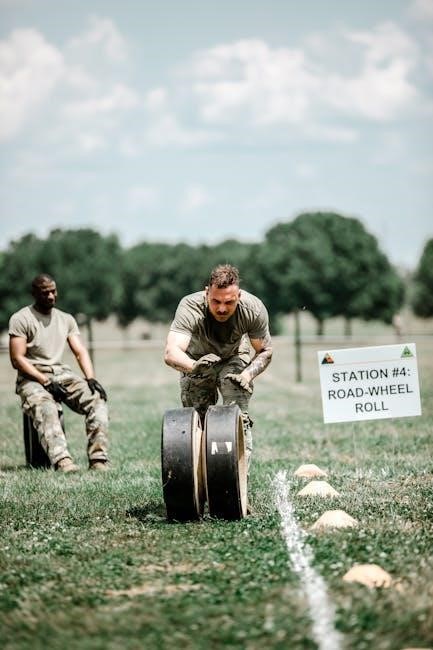
Essential survival techniques empower soldiers to endure harsh environments‚ focusing on first aid‚ securing potable water‚ and constructing protective shelters for longevity.
Basic First Aid and Casualty Care
This section details crucial life-saving procedures for immediate medical intervention in the field. Soldiers must be proficient in assessing casualties‚ controlling bleeding through direct pressure and tourniquet application‚ and managing airway obstructions to ensure proper respiration.
Treatment for shock‚ burns‚ and fractures are also covered‚ emphasizing the importance of stabilization and evacuation procedures. Understanding and applying basic wound care principles – cleaning‚ dressing‚ and bandaging – are paramount.
Furthermore‚ soldiers will learn to recognize and address common combat injuries‚ including gunshot wounds and shrapnel injuries. The manual stresses the need for continuous assessment of the casualty’s condition and prompt reporting to medical personnel‚ ultimately maximizing survival rates and minimizing long-term complications.
Water Procurement and Purification
Sustaining hydration is critical for operational effectiveness‚ and this section focuses on locating and securing potable water sources in diverse environments. Soldiers will learn techniques for identifying potential water sources‚ including rivers‚ streams‚ ponds‚ and even collecting rainwater or dew.
However‚ raw water sources often contain harmful contaminants‚ necessitating purification methods. The manual details various purification techniques‚ such as boiling‚ using water purification tablets (iodine or chlorine)‚ and employing water filters to remove bacteria‚ viruses‚ and sediment.
Understanding the risks associated with contaminated water and the proper application of purification methods are essential for preventing waterborne illnesses. Soldiers must also learn to construct improvised water collection systems and conserve water whenever possible to ensure long-term sustainability in austere conditions.

Shelter Building
Protection from the elements is paramount for maintaining health and combat effectiveness‚ and this section details various shelter construction techniques. Soldiers will learn to assess the environment and select appropriate locations for shelter‚ considering factors like terrain‚ vegetation‚ and potential hazards.
The manual covers constructing natural shelters utilizing available materials like branches‚ leaves‚ and snow‚ as well as employing man-made materials such as ponchos or tarps. Emphasis is placed on building shelters that provide insulation from cold‚ protection from rain and wind‚ and concealment from enemy observation.
Soldiers will also learn to prioritize shelter construction based on available time and resources‚ ranging from quick‚ improvised shelters to more robust‚ long-term structures. Proper shelter construction minimizes exposure‚ conserves energy‚ and enhances survivability in challenging environments.

Advanced Soldier Tasks ‒ Skill Levels 2‚ 3‚ and 4
This section details complex operations‚ including land navigation‚ patrolling‚ and offensive/defensive strategies‚ building upon foundational skills.
Land Navigation
Proficient land navigation is crucial for soldiers operating in diverse terrains and challenging environments. This skill encompasses the ability to accurately determine one’s position‚ navigate to objectives‚ and avoid becoming lost or disoriented. Soldiers must master map reading‚ utilizing topographic maps to interpret terrain features‚ elevation contours‚ and man-made structures.
Compass skills are equally vital‚ including understanding declination‚ taking bearings‚ and following azimuths. Advanced techniques involve utilizing GPS devices‚ but soldiers must be prepared to navigate effectively even without technological aids; Practical exercises emphasize terrain association – matching map features to real-world observations – and dead reckoning‚ estimating position based on distance and direction traveled.
Furthermore‚ soldiers learn to create and interpret route cards‚ plan routes considering terrain and potential obstacles‚ and employ navigation in limited visibility conditions. Successful land navigation ensures mission success and enhances soldier survivability.
Patrolling Techniques
Effective patrolling is a cornerstone of military operations‚ providing reconnaissance‚ security‚ and disrupting enemy activities. Soldiers must learn various patrol formations – wedge‚ vee‚ column‚ and echelon – adapting them to terrain‚ visibility‚ and threat levels. Emphasis is placed on maintaining situational awareness‚ observing for signs of enemy presence‚ and reporting information accurately.
Movement techniques include utilizing terrain for concealment‚ employing noise and light discipline‚ and establishing observation posts. Soldiers practice reacting to contact‚ employing immediate action drills to suppress the enemy and gain tactical advantage. Communication is paramount‚ utilizing hand and arm signals and radio procedures to maintain cohesion and report findings.
Patrols also focus on route selection‚ avoiding predictable patterns‚ and establishing rally points for reassembly. Successful patrolling requires discipline‚ teamwork‚ and a proactive approach to identifying and mitigating risks.
Offensive and Defensive Operations
Mastering offensive and defensive tactics is crucial for soldiers to successfully engage and defeat the enemy. Offensive operations encompass various maneuvers‚ including attacks‚ raids‚ and ambushes‚ requiring coordinated movements and fire support. Soldiers learn to breach obstacles‚ clear buildings‚ and exploit enemy weaknesses‚ always prioritizing mission accomplishment and minimizing casualties.
Defensive operations focus on establishing strongpoints‚ constructing fighting positions‚ and employing interlocking fields of fire. Soldiers practice defending against ground and aerial attacks‚ utilizing camouflage‚ concealment‚ and deception to enhance survivability. Understanding terrain analysis and utilizing defensive aids are key components.
Both offensive and defensive operations demand effective communication‚ disciplined fire control‚ and adaptability to changing battlefield conditions. Soldiers must be proficient in utilizing combined arms tactics and coordinating with supporting elements.