
the beaks of finches lab answers pdf
Explore how finch beak shapes changed over time! Get the answers to the 'Beaks of Finches' lab & understand natural selection. Download the PDF now!
The Beaks of Finches Lab: A Comprehensive Overview
This lab, designed for NYS Regents Living Environment, simulates natural selection using various “beaks” and seed types. Answers often involve analyzing consumption rates and adaptive advantages.
Understanding finch diversity charts and the impact of mutations are key to interpreting lab results, often found in PDF format for student reference.
The Beaks of Finches Lab serves as a powerful demonstration of natural selection, a cornerstone of evolutionary biology. This activity, frequently available as a PDF resource for students, immerses participants in a simulated environment mirroring the challenges faced by Darwin’s finches.
The core principle explored is how variations in traits – specifically, beak morphology – influence an organism’s ability to thrive in a given environment. Students actively embody this concept by utilizing different “beaks” (tools) to compete for various “food” sources (seeds).
Success isn’t determined by chance, but by the efficiency with which a particular beak type can exploit a specific food source. This directly illustrates how organisms with advantageous traits are more likely to survive and reproduce, passing those traits onto subsequent generations. Finding answers to questions often requires understanding this fundamental relationship between phenotype and environmental pressures.
Historical Context: Darwin’s Finches
The Beaks of Finches Lab draws its inspiration from Charles Darwin’s observations on the Galápagos Islands. During his voyage on the HMS Beagle, Darwin meticulously documented the diverse finch populations inhabiting these isolated islands. He noticed striking variations in beak shape and size, correlating directly with the available food sources.
These finches, though originating from a common ancestor, had evolved distinct beak morphologies adapted to exploit different ecological niches – some for cracking hard seeds, others for probing flowers, and still others for consuming insects. This observation was pivotal in formulating his theory of natural selection.
Understanding this historical context is crucial when interpreting lab results, often detailed in a PDF guide. The lab isn’t merely an exercise in simulation; it’s a re-enactment of the very processes Darwin witnessed, providing tangible evidence supporting his groundbreaking work. Finding correct answers requires recognizing this evolutionary history.
The Role of Beak Morphology
Beak morphology – the shape and size of a finch’s beak – is the central element in understanding adaptation and natural selection. Different beak structures are specifically suited for acquiring different food types. A robust, thick beak excels at cracking hard seeds, while a slender, pointed beak is ideal for probing flowers or catching insects.
In The Beaks of Finches Lab, students simulate this relationship by using tools representing various beak types to “feed” on different seed sizes. The efficiency with which each “beak” gathers its corresponding food source directly demonstrates the adaptive advantage conferred by specific morphological traits.
Analyzing these results, often found within a PDF document detailing the lab, is key to answering questions about evolutionary fitness. Correct answers hinge on recognizing how beak shape dictates feeding success and, ultimately, survival and reproduction. This morphological variation is the engine of evolutionary change.
Lab Objectives & Hypothesis Formation
The primary objective of The Beaks of Finches Lab is to demonstrate the principles of natural selection and adaptive radiation. Students actively explore how variations in heritable traits – specifically, beak morphology – impact an organism’s ability to survive and reproduce in a given environment.
Prior to the lab, students typically formulate a hypothesis predicting which “beak” type will be most successful with each food source. This prediction is based on the understanding that form follows function; a beak suited to a food type will allow for more efficient consumption.
Answers to post-lab questions often require students to justify their initial hypothesis, explain whether their results supported or refuted it, and analyze the data collected. Detailed lab reports, often available as a PDF, guide students through this process of scientific inquiry and data interpretation.
Materials Used in the Beaks of Finches Lab
The Beaks of Finches Lab utilizes a variety of materials to simulate evolutionary pressures. Crucially, it employs different “beaks” – typically tools like clothespins, forceps, spoons, and pliers – each representing a distinct finch species’ beak morphology.
These tools are used to manipulate “food sources,” which consist of various seed sizes and types, such as small seeds (representing readily available food) and large seeds (representing a more challenging resource). Dishes or containers hold these seed populations.
Data collection relies on timers, beakers for measuring seed consumption, and data tables for recording observations. Many educators provide a lab worksheet or a comprehensive PDF document outlining the procedure and providing space for answers and analysis. These materials collectively facilitate a hands-on exploration of natural selection.
Tools Representing Different Finch Beaks

The Beaks of Finches Lab cleverly employs everyday tools to mimic the diverse beak shapes found in Darwin’s finches. Clothespins often represent a probing beak, ideal for extracting insects from crevices. Forceps simulate a grasping beak, suited for manipulating objects.
Spoons embody a broad, crushing beak, effective for breaking larger seeds. Pliers, conversely, represent a strong, conical beak designed for cracking tough shells. These tools aren’t just random selections; they directly correlate to specific feeding strategies observed in real finch populations.
Understanding which tool represents which beak type is crucial for interpreting lab results and correctly answering questions, often found within a provided PDF worksheet. Analyzing the efficiency of each “beak” with different seed types is central to grasping the concept of adaptive radiation.
Food Sources & Their Representation
The Beaks of Finches Lab utilizes various “food” sources to simulate the diverse diets of finches. Small seeds, like birdseed, represent easily accessible food requiring minimal effort to consume. Large seeds, such as sunflower seeds, demand more robust beaks for cracking and accessing the kernel.
Other representations might include beans simulating insects, or even small marbles representing harder nuts. The size and toughness of these “food” items directly influence which “beak” type is most successful at obtaining them. This mimics the natural selection pressures faced by finches in their environment.
Correctly identifying which food source corresponds to specific beak adaptations is vital for answering lab questions, frequently detailed in a downloadable PDF document. Analyzing consumption rates with each food type reveals the adaptive advantages of different beak morphologies.
Procedure: Simulating Competition
The Beaks of Finches Lab procedure centers around simulating competition for resources. Students, representing different finch species, utilize assigned “beaks” – tools like tongs, clothespins, and spoons – to gather “food” (seeds) from designated dishes.
The lab is typically conducted in timed “rounds,” each focusing on a different food source. One team member actively collects seeds while others record data. This mimics the natural struggle for survival and reproduction. Observing which beak types excel with each seed size demonstrates adaptive advantages.
Detailed instructions, including data collection methods and analysis prompts, are often provided in a PDF guide. Correctly following the procedure and accurately recording data are crucial for obtaining meaningful results and answering lab-related questions effectively.
Round One: Small Seeds & Initial Observations
Round One of The Beaks of Finches Lab focuses on small seeds, allowing initial observations of beak efficiency. Students use their assigned tools to pick up as many small seeds as possible within a set time limit, transferring them to a designated container.
Initial observations often reveal that certain “beaks” – like tweezers or small tongs – are more adept at handling small seeds than others. This demonstrates a direct correlation between beak morphology and food source accessibility. Data collected during this round establishes a baseline for comparison with subsequent rounds.
Lab reports, frequently available as a PDF, will require students to analyze seed consumption rates and identify which beak types performed best. Understanding these initial results is key to predicting performance with larger seeds and interpreting the principles of natural selection.
Round Two: Large Seeds & Adaptive Challenges
Round Two introduces large seeds, presenting significant adaptive challenges for many “beak” types. Students repeat the seed-gathering process, but now must contend with seeds that are more difficult to grasp and manipulate with their assigned tools.
Observations during this round typically highlight the limitations of beaks previously successful with small seeds. For example, tweezers may struggle with larger seeds, while pliers or clothespins demonstrate increased efficiency. This shift illustrates how environmental pressures favor specific traits.
Lab reports, often found as a PDF document, require analysis of the change in consumption rates between rounds. Students must explain how beak morphology impacts the ability to exploit different food sources, demonstrating an understanding of natural selection’s role in adaptation.
Data Collection & Analysis
Data collection in the Beaks of Finches Lab centers around quantifying seed consumption rates for each “beak” type across both rounds. Students meticulously record the number of seeds collected within a specified timeframe, typically one minute per round, per team member;
Analysis involves calculating averages and comparing performance between rounds and beak types. This often includes creating tables and graphs to visually represent the data, highlighting trends and differences in efficiency. Students then interpret these findings in the context of natural selection.
Lab reports, frequently available as a PDF, demand a thorough discussion of the collected data. Answers should demonstrate an understanding of how to draw conclusions based on evidence and relate the results back to the principles of adaptation and evolutionary change.
Analyzing Seed Consumption Rates
Analyzing seed consumption rates is central to understanding the Beaks of Finches Lab. Students calculate the average number of seeds collected per minute by each “beak” type during both the small and large seed rounds. This provides a quantitative measure of feeding efficiency.
Comparing these rates reveals which beak morphologies are best suited for each food source. Higher consumption rates indicate a stronger selective advantage in a given environment. Students often present this data in tables and graphs for clarity.
Lab reports, often found as a PDF, require students to explain these differences. Correct answers demonstrate a clear link between beak structure, feeding rate, and the principles of natural selection, showcasing adaptive success.
Correlation Between Beak Type and Food Source

Establishing the correlation between beak type and food source is a core objective of the Beaks of Finches Lab. Students observe which “beaks” (tools) excel at collecting specific seed sizes – small versus large. This demonstrates how morphology directly impacts feeding success.
Typically, shorter, wider beaks are more efficient with small seeds, while larger, stronger beaks are better suited for cracking larger seeds. Analyzing these relationships reveals the selective pressures driving beak evolution.
Lab reports, frequently available as a PDF, require students to articulate this connection. Correct answers will detail how specific beak characteristics provide an advantage when exploiting a particular food resource, illustrating natural selection in action.
Identifying Adaptive Advantages
Identifying adaptive advantages is central to understanding the Beaks of Finches Lab. Students must determine how each “beak” (tool) provides a benefit for acquiring a specific food source. This isn’t simply noting which beak collects more seeds, but explaining why.
For example, a beak resembling pliers offers a strong grip for cracking tough, large seeds, an advantage when small seeds are scarce. Conversely, a slender “beak” is efficient at extracting small seeds quickly.
Lab write-ups, often found as a PDF, demand students clearly articulate these advantages. Correct answers demonstrate comprehension of how variations in beak morphology enhance survival and reproductive success in different environments, showcasing the principles of natural selection.
Common Questions & Answers from the Lab
Frequently, students ask about the “correct” beak for each seed type. The lab isn’t about a single right answer, but demonstrating how different beaks offer varying degrees of efficiency. Another common query concerns the impact of seed availability – how a shift in food source affects beak adaptation.
Many seek clarification on data analysis, specifically calculating consumption rates and interpreting charts. PDF versions of the lab often include sample data and guided questions to aid in this process. Students also question the realism of the simulation, prompting discussion about the complexities of natural selection.
Understanding that the lab models evolutionary principles, not a perfect replication of nature, is crucial. Correct answers reflect this nuanced understanding.
Basic Assumptions of the Lab Activity
A core assumption is that variation exists within finch populations – not all beaks are identical. This stems from random mutations and genetic recombination. The lab also assumes that certain beak shapes are more advantageous for specific food sources, driving natural selection.
Another key premise is that competition for resources exists. Students, representing different finch species, compete for limited seeds, mirroring real-world ecological pressures. The activity simplifies this competition, focusing on beak efficiency as the primary selective factor.
PDF resources accompanying the lab often highlight these assumptions. Understanding them is vital for interpreting results and formulating accurate answers. The lab doesn’t account for all evolutionary factors, but provides a foundational model.
Interpreting Finch Diversity Charts
Finch diversity charts, frequently found within the Beaks of Finches lab’s PDF materials, visually represent the distribution of beak types within a population. Analyzing these charts reveals how environmental pressures influence beak morphology over time.
Students must correlate beak size and shape with available food sources. A chart showing a higher proportion of thick beaks suggests a prevalence of large, hard seeds. Conversely, a dominance of slender beaks indicates an abundance of smaller seeds or insects.
When answering questions based on these charts, consider the concept of adaptive radiation. The lab demonstrates how a single ancestral species can diversify into multiple forms, each specialized for a particular niche. Accurate interpretation is crucial for correct answers.
Variations Within Finch Species
The Beaks of Finches lab, often accessed as a PDF, highlights that even within a single finch species, significant beak variations exist. These differences aren’t random; they’re the result of genetic diversity and adaptation to specific food sources.
It’s unlikely all beaks within a population are identical. Random mutations introduce new gene combinations, and sexual reproduction further shuffles the genetic deck. This leads to a range of beak sizes and shapes, impacting feeding efficiency.
When answering lab questions, remember that these variations provide the raw material for natural selection. Individuals with beaks better suited to the available food have a higher chance of survival and reproduction, passing on their advantageous traits. Understanding this is key to interpreting lab results.
The Impact of Random Mutations
The Beaks of Finches lab, frequently found as a downloadable PDF, demonstrates how random mutations drive evolutionary change. These mutations, occurring spontaneously, introduce genetic variation within finch populations, altering beak characteristics.
While many mutations are neutral or harmful, some can prove beneficial in a specific environment. For example, a mutation leading to a slightly stronger beak might improve seed-cracking ability. This advantage isn’t pre-planned; it’s a chance occurrence.
When analyzing lab data, remember mutations aren’t directed towards a specific goal. They simply create differences. Natural selection then acts upon these differences, favoring traits that enhance survival and reproduction. Correct answers often reflect this understanding of the random nature of mutation.
Natural Selection in Action
The Beaks of Finches lab, often accessed as a PDF resource, vividly illustrates natural selection. Students observe how “finch” groups with beaks best suited to available food sources thrive, while others struggle.
This isn’t due to superior effort, but to inherent advantages conferred by beak morphology. Analyzing seed consumption rates reveals a clear correlation between beak type and feeding efficiency – a core concept of the lab.
Correct answers to lab questions emphasize that natural selection isn’t random; it’s the outcome of interactions between organisms and their environment. The activity demonstrates how environmental pressures “select” for advantageous traits, leading to adaptation and, over time, evolution. The lab successfully models this process in a simplified, observable manner.
Connecting Lab Results to Real-World Evolution
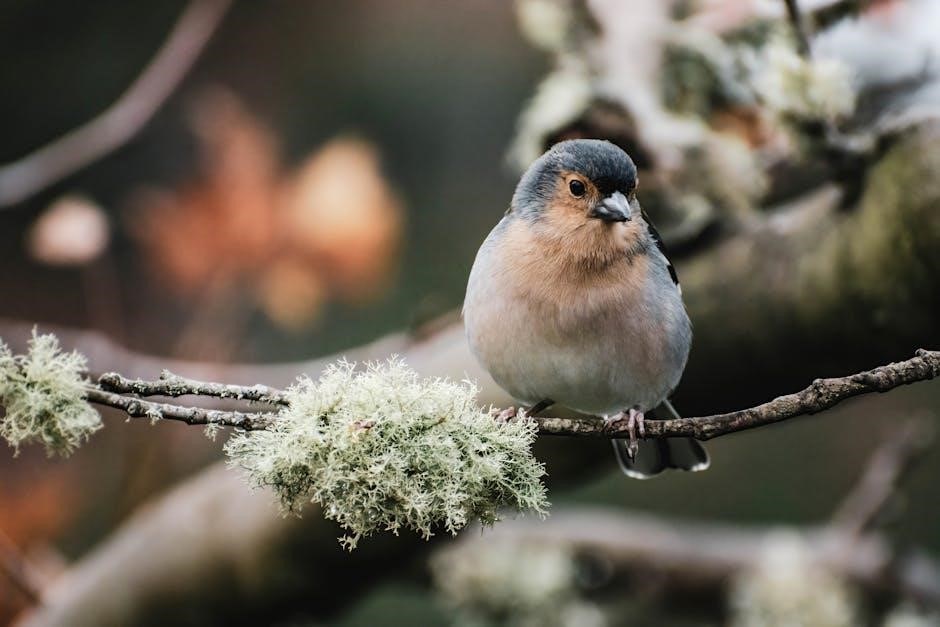
The Beaks of Finches lab, frequently distributed as a PDF study guide, serves as a microcosm of Darwin’s observations on the Galapagos Islands. The simulated competition mirrors the ecological pressures that drove finch evolution in their natural habitat.
Answers to lab questions should highlight the parallels: beak variations in the lab directly correspond to the diverse beak shapes observed by Darwin, each adapted to specific food sources.
Understanding that random mutations, as explored in the lab, are the raw material for evolutionary change is crucial. The lab demonstrates how these mutations, combined with natural selection, can lead to significant diversification over generations. This activity provides a tangible link between classroom learning and the grand scale of evolutionary history.